Showing posts with label Culture. Show all posts

Kerajinan Ukir Jepara, Maju Sekaligus Mundur

Friday, July 13, 2012


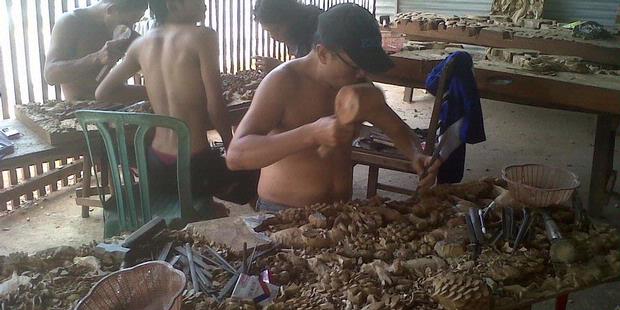
Kerajinan Jepara mengalami kemajuan sekaligus kemunduran. Di satu sisi, minat mengembangkan desain kerajinan meningkat tapi di sisi lain minat menekuni ukiran menurun.

Achmad Zainudin K, perajin mebel anak asal Jepara mengatakan, perkembangan desain bisa dilihat dari karya para perajin generasi muda. Desain mebel sebagai salah satu bentuk kerajinan mulai beragam.

"Memang tidak berubah secara radikal. Tapi mulai ada desain baru. Tetap mengangkat unsur lokal tapi ada pengembangan," ungkap Zainudin saat ditemui Kompas.com, Kamis (12/7/2012) di Jepara.

Perkembangan desain sedikit banyak dipengaruhi oleh adanya Sekolah Tinggi Teknologi Desain (STTDNU). Alumni STTDNU banyak yang bergelut di dunia kerajinan. Mereka juga membangun komunitas bernama Desain Jepara (DJ).

"Di komunitas, mereka berbagi sekaligus bisa mensosialisasikan desain-desain baru. Ini bisa memacu bentuk kerjasama baru antara desainer dan perajin. Ini hal yang positif sebenarnya," papar Zainuddin.

Di sisi lain, berkurangnya minat generasi muda untuk mengukir diungkapkan oleh Intiyah, pengukir perempuan Jepara berusia 33 tahun yang sudah menekuni seni ukir sejak usia 17 tahun.

"Minat yang muda-muda untuk mengukir itu sudah berkurang. Kalau dulu, dari 10 orang, 8 berminat belajar mengukir. Sekarang itu dari 20 malah cuma 5 yang berminat mengukir," ungkapnya.

Sutrisno, perajin lain, mengungkapkan bahwa berkurangnya minat disebabkan karena proses belajar mengukir yang membutuhkan waktu lama. Untuk bisa mencapai tahap mengukir relief, bisa butuh waktu lebih dari 10 tahun untuk menjadi ahli.

"Lalu juga karena yang muda memang sudah tidak dekat dengan ukiran," kata Sutrisno. Banyak keluarga yang sukses di industri mebel pada tahun 90-an namun lupa mengenalkan penerusnya pada ukiran.

Kreativitas dalam mendesain memang perlu diapresiasi. Namun, berkurangnya minat generasi muda dalam mengukir juga perlu diwaspadai. Pasalnya, Jepara terkenal dengan seni ukirnya. Punya desainer tapi tak punya pengukir, ibarat perencana tak punya eksekutor.

"Kalau sampai tidak ada yang belajar mengukir, ya akibatnya pada kerajinan ukir itu sendiri. Nanti Jepara tidak ada kerajinan ukir lagi kalau begitu," papar Intiyah.

Sutrisno mengatakan, diperlukan upaya untuk meningkatkan minat generasi muda dalam mengukir. Salah satu caranya adalah menggelar kompetisi ukir tanpa dibatasi tema sehingga setiap orang bebas membuat karya.

http://regional.kompas.com/read/2012/07/13/06201271/Kerajinan.Ukir.Jepara.Maju.Sekaligus.Mundur
Read more ...

Baratan in Kalinyamatan

Sunday, September 20, 2009


There are several versions of the traditional events ‘Baratan’ in the village Purwogondo, Sub District Kalinyamatan, Jepara, as told Riwayatul Mahya, village officials. Among other things, routine annual event is always commemorated every mid-Sha'ban (Ruwah) is related to the legend of Emperor Hadlirin, husband of Queen Kalinyamat (Retno Kencono), daughter of the Sultan who is also Duke Trenggono Jepara (1549-1579).

According to the story, the Sultan Raden Hadlirin formerly Thoyyib. Because his presence on Jepara, he was nicknamed Sultan Hadlirin (Arabic: hadlara: attend, arrive). He left China and went wandering. In his wanderings he came in Jepara.

Once gain Retno Kencono, he accompanied the Queen as the Duke of Jepara. It is the habit of the old days, travelers, especially the husband of a retainer, Sultan Hadlirin horseback accompanied by his bodyguards in a journey of war. Once he arrived in the village of Purwogondo (now in the central district Kalinyamatan). Suddenly a host horse gallop away, so that his bodyguards had lost track of his master. Then he searched the village use impes lights (lanterns), a type of traditional lamp oil lamp with oil fuel. Although the evening, then wind the night was very friendly, almost no wind that usually blows hard from the west(Barat). Sultan Hadlirin eventually be found only by using the traditional lamp.

By society, then it became a tradition preserved called Baratan from (barat) western word (meaning there was no wind from the west in search of Sultan Hadlirin). The second version, as Mahya, according to the custom event Baratan, that was the way scholars in the past, filled of Sha'ban virtue.

Baratan comes from the Arabic word baraatan (free) from sin. They warned the way together with the present safety of mace, meals of sticky rice (puli). The word mace said to have originated from the Arabic 'afwu Lii (forgive me). Because the event was meant to beg forgiveness from Allah SWT to be free from sin
Read more ...

Torch War in Tegalsambi


Tegalsambi Village, District Tahunan, which has a total area of 153 hectares. The small village south of Jepara, it is often held ritual named Torch War - at war with baked banana stem. In down-down, the ritual is believed to be a form of "charity of the earth" or expressions of gratitude of local residents to Almighty God blessing overflow sustenance crops and safety

Armed with these beliefs, one morning, some residents busy preparing all the logistics for the customary ritual in the village hall. Some people seem to make the equipment Torch War. Materials used are torches rolls midrib of dried coconut leaves on the inside is filled with dried banana leaves with large quantities. Furthermore, a torch attached to a piece of bamboo. Remembering War customary ritual torch is very important, the chief Hamid Nur Tegal Sambi was chairing a meeting preparation. This includes a series of activities to prepare the annual event.

Evening, the village chief who also serves as a traditional leader to start the ritual change Tegalsambi heritage village gloves stored at his residence. Heritage village in question is a piece of wood believed to be the legacy of Sunan Kalijaga. These heritage items are also believed to have supernatural powers that protect all citizens of the village from all disaster. Nur Hamid also pray to the Almighty.
Read more ...

Lomban party in Jepara Coast


Lomban party in Jepara used to be a fisherman’s party in Jepara area, nowadays Lomban party belongs to all Jeparanese. This party is the top of Lebaran day celebration, held a week after Lebaran day.

LoLomban party is also called as “Bakda Kupat”. Jepara people celebrate the Lomban party with several traditional food like “Lepet” and “Kupat”, that’s why Lomban is also know as “Bakda Kupat” instead of “Lepet”and “Kupat”, Jeparanese also serve other delicious foods such as : opor ayam, sambal goreng, oseng-oseng, etc.

Kupat is a popular food during the Lebaran day celebration to Indonesian people particularly to Central Java people. Kupat is made of rice covered with young leaves of coconut tree which is rectangularly shaped, while ’lepet’ (another traditional food served during Lebaran day) is made of sticky rice, added with special flavour, also covered with young leaves of coconut tree, same with “Kupat” but has different is shape. Jeparanese celebrate the Lomban party by visiting the tourist object in Jepara Regency. The most favourite tourist object is Kartini Beach.

The word “Lomban” comes from “Lomban” which means “compete” there is also opinion which all those the word of “Lomban” comes from the word “Lelumban” which means “Pleasure”.
Read more ...